I did not trust sauerkraut in a main dish. Honestly, I thought mixing fermented cabbage with sausage sounded like a mistake until that rainy Tuesday in October. My grandmother used to serve it as a side, separate and stiff, but I wanted something that felt like a hug on a plate. The smell alone was the barrier—sharp, acidic, and unmistakably pungent. I kept the jar in the back of the fridge, waiting for it to expire.
Then my brother brought over a package of thick-cut Bavarian bratwurst and a bag of fresh kraut from the local German market. He insisted we just throw it all in a cast iron skillet. I rolled my eyes, but hunger is a powerful motivator. We browned the sausages first, rendering out that rich, fatty flavor. Then came the cabbage, sizzling and softening in the juices.
I took a tentative bite, expecting a clash of flavors. Instead, I got balance. The fat from the bratwurst cut through the tang of the kraut perfectly. The onions added sweetness, and the caraway seeds provided a warm, earthy note. It wasn’t just food; it was comfort, simplified. I realized then that the fermentation wasn’t a flaw, but the key ingredient.
That single meal changed how I view preserved vegetables. I stopped seeing sauerkraut as just a condiment and started seeing it as a base. This Savory Bavarian Bratwurst and Sauerkraut Skillet became a staple for cold nights. It proved that you don’t need fancy techniques to make something soul-warming. Sometimes, you just need heat, fat, and patience.
Why You’ll Love This Recipe
This isn’t just another sausage recipe. It is the result of years of tweaking ratios to get that perfect balance of tang and savory richness. I have tested this method dozens of times, adjusting the heat and the liquid content until it was foolproof. Here is why this dish stands out from the crowd:
- Quick & Easy: Comes together in under 45 minutes, perfect for busy weeknights when you want something hearty but don’t have hours to cook.
- Simple Ingredients: No fancy grocery trips needed; you likely already have onions, oil, and spices in your kitchen. The bratwurst and kraut are the stars.
- Perfect for Winter: Great for cozy dinners, especially when the wind is howling outside. It feels like a warm blanket for your stomach.
- Crowd-Pleaser: Always gets rave reviews from kids and adults alike. The sweetness of the cooked onions usually wins over the pickiest eaters.
- Unbelievably Delicious: The texture and flavor combo is next-level comfort food. The kraut becomes tender yet retains a slight crunch, while the sausage stays juicy.
What makes this recipe different is the technique of deglazing with beer or broth. Most people just boil the kraut, but here we caramelize the onions and brown the sausage first. This builds a fond on the bottom of the pan that infuses every bite with deep, roasted flavors. It is comfort food reimagined—simpler, faster, but with the same soul-soothing satisfaction as a restaurant meal.
What Ingredients You Will Need
This recipe uses simple, wholesome ingredients to deliver bold flavor and satisfying texture without the fuss. The magic lies in the quality of the sausage and the freshness of the cabbage. You do not need a long list of exotic spices, just the essentials done right.
- Bavarian Bratwurst (4-6 links): Look for fresh, raw sausages rather than pre-cooked ones. Fresh brats have a better snap and juicier interior. I recommend ButcherBox or a local butcher for the best meat quality.
- Sauerkraut (2 large jars or 1.5 lbs): Use the refrigerated kind, not the shelf-stable canned version. Shelf-stable kraut can be mushy and lacks that bright, live-culture tang. If you can find it, look for “raw” sauerkraut in the dairy aisle.
- Yellow Onions (2 large): These provide the necessary sweetness to counter the acidity. Sweet onions like Vidalia work well if you can find them.
- Unsalted Butter (2 tablespoons): Adds richness and helps in browning the sausages. You can use olive oil, but butter gives that traditional German feel.
- Apple Cider (1 cup): Deglazes the pan and adds a fruity note. Non-alcoholic apple juice works if you prefer. Avoid sugary sodas.
- Caraway Seeds (1 teaspoon): The classic flavor pairing for cabbage. Toast them briefly for extra aroma.
- Mustard (Dijon or whole grain): For serving. It adds a sharp kick that cuts through the fat.
- Salt and Black Pepper: To taste. The kraut and sausage are already salty, so go easy here.
- Bay Leaves (1-2): Optional, but adds a subtle herbal depth during the simmering process.
If you need a gluten-free option, most bratwursts are naturally gluten-free, but always check the label for fillers. For a dairy-free version, swap the butter for a high-quality olive oil or avocado oil.
Equipment Needed
You do not need a lot of gadgets for this dish. A large, heavy-bottomed skillet is the most important tool. Cast iron is ideal because it retains heat well and helps brown the sausage evenly. A stainless steel skillet works too, but you might need to watch the heat more closely to prevent sticking.
A wooden spoon or spatula is necessary for stirring without scratching your pan. If you use non-stick, be gentle. A measuring cup is helpful for the apple cider. I also recommend a colander to rinse the sauerkraut if you find it too salty or sour. Having everything prepped before you start cooking makes the process smooth and less stressful.
Preparation Method
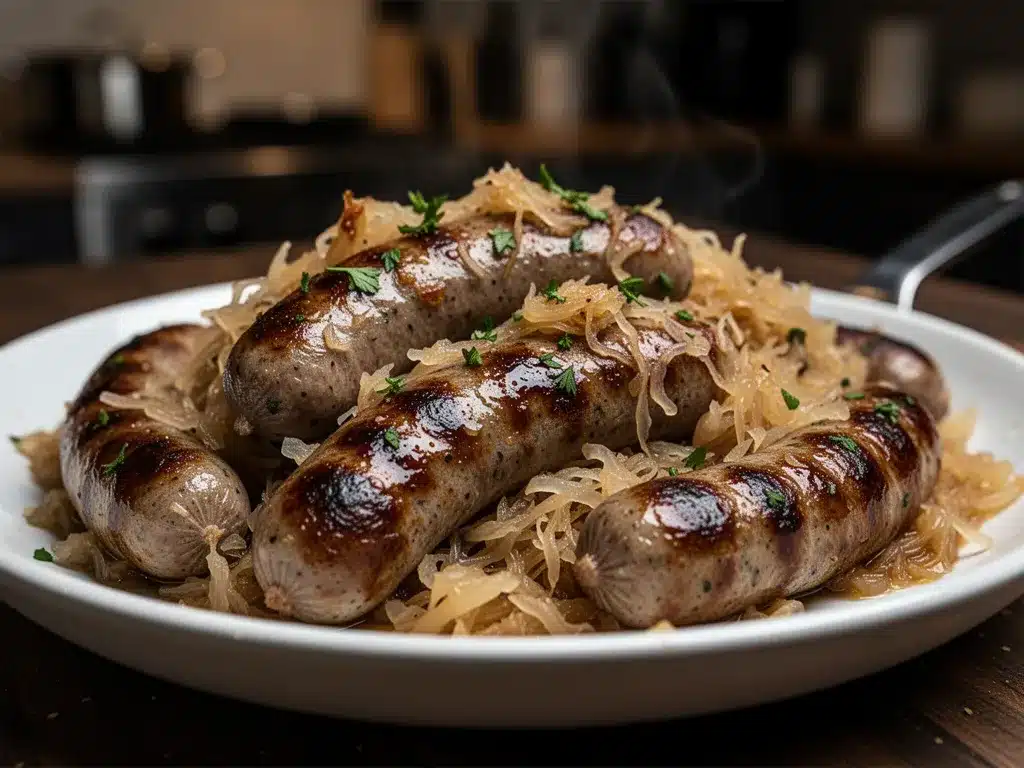
- Prep the Ingredients (5 minutes): Slice the onions into half-moons. Rinse the sauerkraut in a colander under cold water if it smells too strong or tastes very salty. Squeeze out excess water with your hands or a clean towel. This step prevents the final dish from being soupy. Pat the bratwurst dry with paper towels; this helps them brown better.
- Brown the Sausages (10 minutes): Heat the butter in your large skillet over medium-high heat. Once the foam subsides, add the bratwurst links. Cook them for 8-10 minutes, turning frequently, until they are deeply browned on all sides. Do not prick the sausages with a fork, or the juices will escape. Remove them to a plate and set aside.
- Sauté the Onions (5 minutes): Reduce the heat to medium. Add the sliced onions to the same pan with the sausage fat. Cook them for 5 minutes until they start to soften and turn translucent. Stir occasionally to get some of that browned sausage flavor stuck to the pan.
- Add the Kraut and Spices (2 minutes): Stir in the caraway seeds and the drained sauerkraut. Add the bay leaves if using. Cook for 2 minutes, stirring constantly, to let the cabbage heat through and absorb the onion flavors.
- Deglaze and Simmer (15 minutes): Pour in the apple cider. Scrape up any browned bits from the bottom of the pan with your wooden spoon. These bits are pure flavor. Return the sausages to the pan, nesting them into the cabbage mixture. Bring the liquid to a bubble, then reduce heat to low. Cover and simmer for 15 minutes. This allows the flavors to meld and the cabbage to become tender.
- Final Seasoning (2 minutes): Remove the lid. If there is too much liquid, let it simmer uncovered for a few more minutes to reduce. Taste the mixture. Add black pepper if needed, but hold off on salt until you taste it first. Remove the bay leaves.
- Serve: Plate the sausages alongside a generous scoop of the sauerkraut mixture. Serve hot with a dollop of mustard.
Cooking Tips & Techniques
The biggest mistake people make is using pre-cooked sausages. They lack the texture and depth of fresh brats. If you must use pre-cooked ones, you will need to brown them longer to get some color. Another common error is skipping the rinse on the sauerkraut. Jarred kraut can be very salty. Tasting it before adding extra salt is crucial.
Do not rush the browning step. Maillard reaction is key here. You want those sausages to have a dark, crisp exterior. If your pan is too crowded, the sausages will steam instead of fry. Cook in batches if necessary. Also, keep the heat moderate during the simmering phase. High heat will make the cabbage tough and the sausages likely to split.
I once tried this recipe with white wine vinegar instead of apple cider. It was too sharp and lacked the fruity balance. Stick to the cider or a light beer for the best results. The acid needs to be mellow enough to complement the fat, not overpower it.
Variations & Adaptations
This recipe is quite flexible. For a lighter version, swap the bratwurst for chicken or turkey sausages. You will need to add a little more oil to the pan since leaner meats have less fat. For a spicier kick, add a diced jalapeño or a teaspoon of red pepper flakes when you add the onions.
If you want a vegetarian option, use high-quality meatless brats or large portobello mushrooms. Mushrooms hold up well in this dish and provide a meaty texture. You can also add diced apples to the mixture for a sweeter, autumnal flavor profile. This pairs beautifully with the caraway seeds.
For a gluten-free adaptation, ensure your bratwurst is certified gluten-free, as some contain breadcrumbs. Use a gluten-free beer or extra apple cider for deglazing. You can also swap the mustard for a gluten-free variety if needed.
Serving & Storage Suggestions
Serve this dish immediately while it is hot. It pairs wonderfully with crusty bread, mashed potatoes, or spaetzle. A cold lager beer is the traditional drink pairing, but a dry cider also works well. Leftovers can be stored in an airtight container in the refrigerator for up to 3 days.
To reheat, use a skillet over low heat with a splash of water or broth to prevent drying out. The microwave works too, but the sausages may lose some texture. The flavors often improve after a day, as the cabbage has more time to absorb the sausage juices. This makes it a great meal prep option for lunch.
Nutritional Information & Benefits
This dish is high in protein and provides a good source of probiotics from the sauerkraut. Fermented cabbage supports gut health and digestion. The bratwurst adds significant fat and calories, so portion control is wise if you are watching your intake. A typical serving contains approximately 450-500 calories, depending on the size of the sausages.
The onions provide vitamin C and antioxidants. Overall, it is a hearty, filling meal that offers sustained energy. It is not a low-carb dish due to the potential sugar in the cider and onions, but it is balanced enough for a regular dinner. Always check labels for sodium content in processed meats.
Conclusion
This Savory Bavarian Bratwurst and Sauerkraut Skillet is a testament to the power of simple, quality ingredients. It turned my skepticism into love, proving that fermented foods can be the star of the plate. I hope you try it and find your own moment of conversion. Customize it with your favorite sides or spices to make it your own.
Please leave a comment below and let me know how it turned out. Did you rinse the kraut? Did you use beer or cider? I love hearing about your kitchen experiments. Share this recipe with friends who need a cozy dinner idea. Enjoy every bite of this warm, comforting meal.
FAQs
Can I use canned sauerkraut instead of refrigerated?
You can, but the texture and flavor will be different. Canned kraut is often softer and less tangy. If you use it, rinse it thoroughly and squeeze out as much liquid as possible to avoid a watery skillet.
What beer goes best with this dish?
A traditional German lager or pilsner works well. If you are using the beer for cooking, choose one you would enjoy drinking. A dark beer can add a richer, maltier flavor, while a light lager keeps it crisp.
How do I prevent the sausages from bursting?
Never prick the casings. Brown them gently over medium heat and turn them frequently. If they start to split, reduce the heat immediately. The pressure build-up is what causes bursting.
Can I make this in a slow cooker?
Yes, but you will miss out on the browned flavor. Brown the sausages and onions in a pan first, then transfer everything to the slow cooker. Cook on low for 4-6 hours for the best results.
Is sauerkraut healthy?
Yes, especially if it is raw and unpasteurized. It is rich in probiotics, fiber, and vitamins C and K. Cooking it reduces some of the probiotic benefits, but the fiber and nutrients remain.
Pin This Recipe!
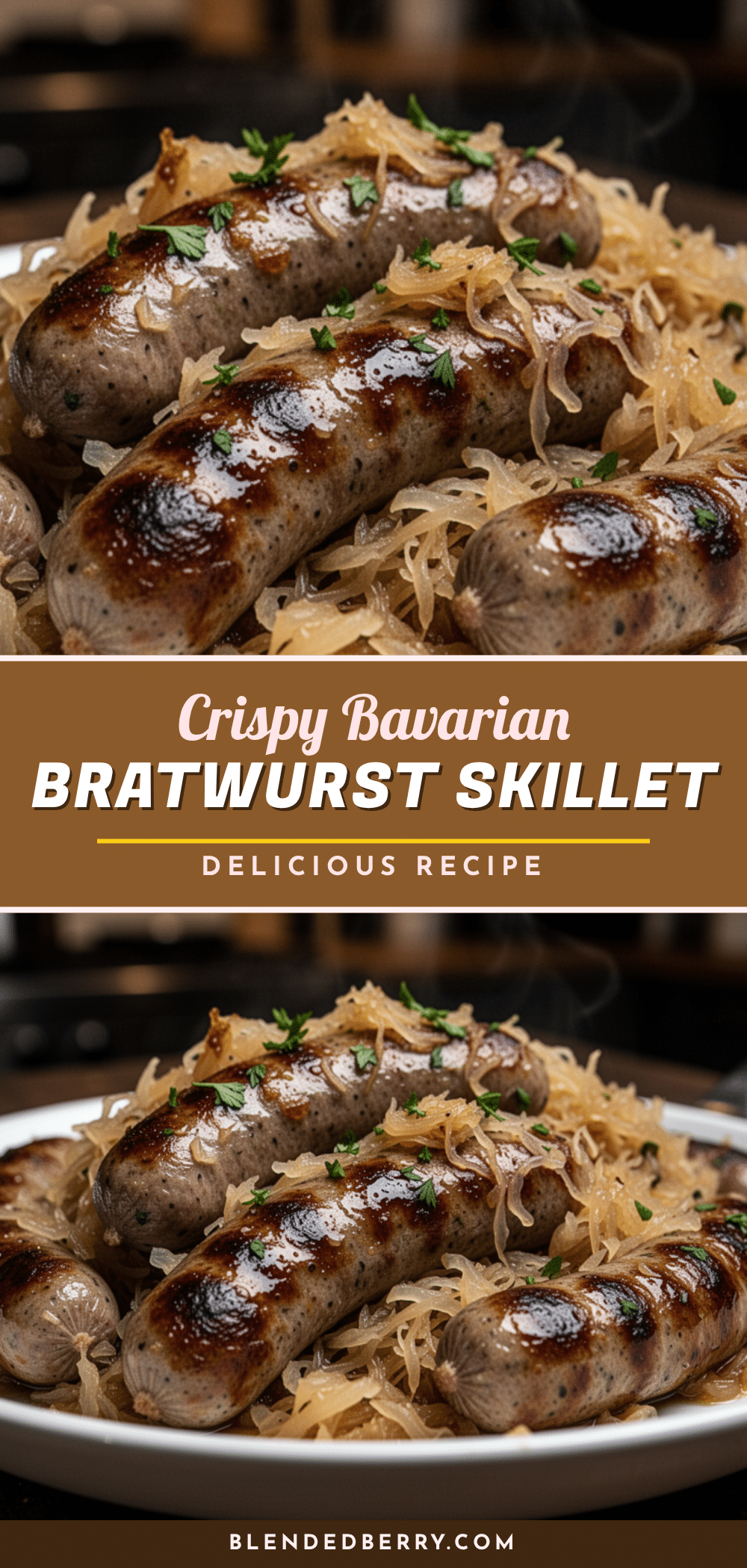
Savory Bavarian Bratwurst and Sauerkraut Skillet

A hearty one-pan meal featuring browned Bavarian bratwurst simmered with caramelized onions, tangy sauerkraut, and apple cider for a perfect balance of savory and sweet flavors.
- Prep Time: 5 minutes
- Cook Time: 40 minutes
- Total Time: 45 minutes
- Yield: 4 servings 1x
- Category: Main Course
- Cuisine: German
Ingredients
- 4–6 links fresh Bavarian Bratwurst
- 1.5 lbs (or 2 large jars) raw refrigerated sauerkraut
- 2 large yellow onions, sliced into half-moons
- 2 tablespoons unsalted butter
- 1 cup apple cider (or non-alcoholic apple juice)
- 1 teaspoon caraway seeds
- 1–2 bay leaves (optional)
- Salt and black pepper to taste
- Dijon or whole grain mustard for serving
Instructions
- Slice the onions and rinse the sauerkraut under cold water to reduce saltiness; squeeze out excess water and pat the bratwurst dry.
- Heat butter in a large heavy-bottomed skillet over medium-high heat. Brown the bratwurst links for 8-10 minutes, turning frequently, until deeply browned on all sides. Remove sausages to a plate.
- Reduce heat to medium. Add sliced onions to the pan with the sausage fat and cook for 5 minutes until softened and translucent.
- Stir in caraway seeds, drained sauerkraut, and bay leaves. Cook for 2 minutes, stirring constantly.
- Pour in apple cider, scraping up browned bits from the bottom of the pan. Return sausages to the pan, nesting them into the cabbage.
- Bring liquid to a bubble, then reduce heat to low. Cover and simmer for 15 minutes.
- Remove lid and simmer uncovered for a few minutes if there is too much liquid. Season with black pepper and remove bay leaves.
- Serve hot with a dollop of mustard.
Notes
Do not prick the sausages with a fork to retain juices. If the sauerkraut is too salty, rinse it thoroughly. For a dairy-free version, swap butter for olive oil. For a vegetarian option, use meatless brats or portobello mushrooms.
Nutrition
- Serving Size: 1-2 sausages with a
- Calories: 450500
- Sugar: 8
- Sodium: 900
- Fat: 35
- Saturated Fat: 12
- Carbohydrates: 15
- Fiber: 4
- Protein: 25
Keywords: Bavarian bratwurst, sauerkraut, one-pan meal, German sausage, comfort food, winter dinner, skillet meal, fermented cabbage